

What Is Suboxone & How Does It Work?
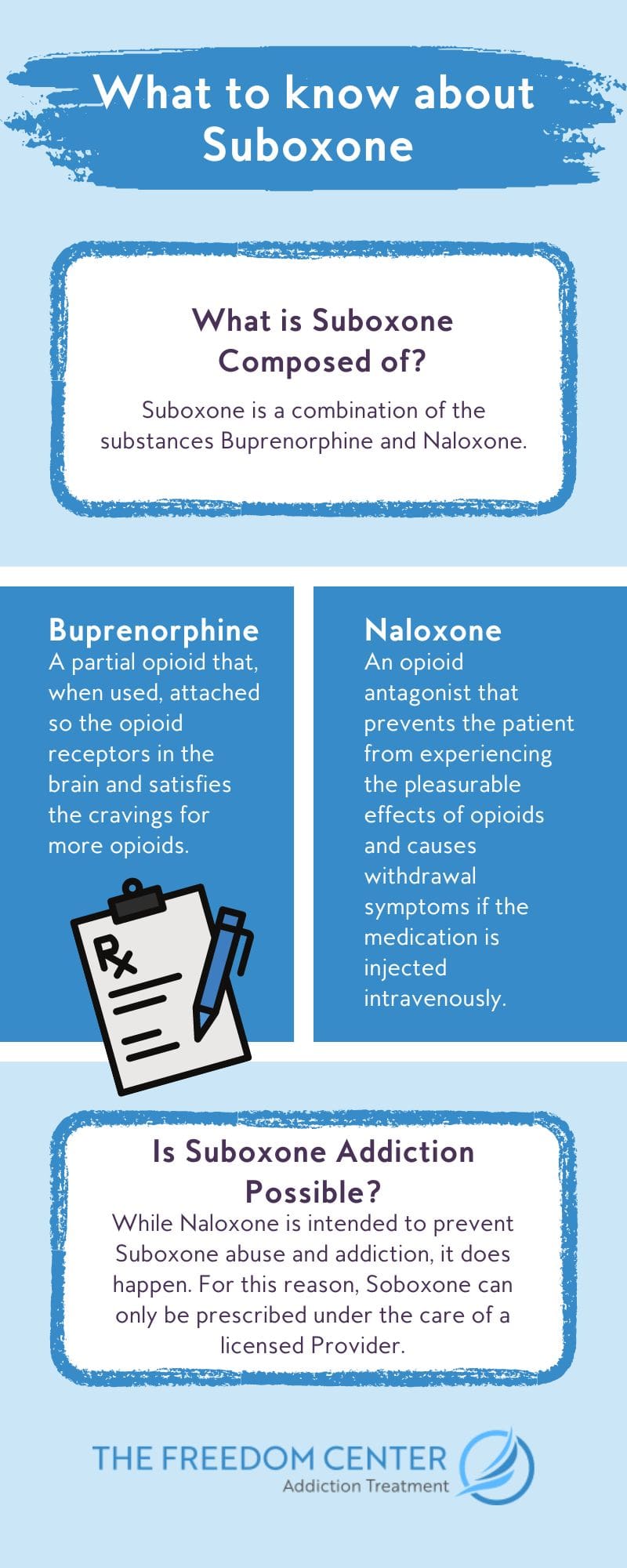
Suboxone is a brand-name opioid prescription medication with two active ingredients: buprenorphine and naloxone. It comes as a tablet or film and is a common sight in drug addiction treatment centers. Suboxone is used to treat opioid addiction and withdrawal. This medication can reduce the likelihood of continued opioid abuse, of developing a physical dependency or incurring opioid side effects.
Buprenorphine’s Purpose in Suboxone
Buprenorphine is a partial opioid that activates mu (opioid) receptors to satisfy the physical craving but has only a fraction of a typical opioid’s potency. It also maintains its physical presence in the brain much longer than other opioids, effectively occupying the receptors and making them much less responsive to later illicit opioid use.
Perhaps, the greatest benefit of buprenorphine is that it has a cap of how much stimulation it will provide, this is known as a “drug ceiling” effect. With all of these functions combined, this drug is highly effective at disrupting the vicious cycle of addiction and makes weaning off opioids much easier.
Naloxone’s Purpose in Suboxone
Naloxone is an opioid antagonist that blocks opioids from producing pleasurable feelings. Why is this so significant? The relationship between a drug and the reward center of the brain plays a crucial role in the development of physical dependency. Severing this relationship is important for reducing cravings and restoring neurotransmitter activity back to normal.
Naloxone also acts as a sort of backup or failsafe to discourage inappropriate opioid use. If injected (instead of being taken orally as intended), Naloxone will initiate uncomfortable withdrawal symptoms – a form of negative reinforcement.
How Does Suboxone Addiction Happen?
It is a cruel irony that a medication used to overcome addiction can itself be addictive. Being a partial opioid, buprenorphine carries the same inherent risk that all other opioids have whether they are prescribed or illicit. The euphoric effects are significantly milder, but can still trigger the reward system of the brain and result in a physical dependency. As such, Suboxone addiction can occur even when used as prescribed.
The majority of cases of Suboxone addiction however are caused by (intentional) improper use in attempts to achieve an opioid high. Taking a too-high dosage or injecting it directly into the bloodstream both result in a much more intense reaction. While suboxone prescribed for administration outside of a medical setting is usually in a form that is more difficult to abuse (strips or lozenges), it is still possible. Crushing and snorting pills, or taking more Suboxone film strips at once than prescribed are other ways that Suboxone abuse occurs. It is not clear whether prolonged use of Suboxone increases the likelihood of addiction, but we do know that all forms of Suboxone can potentially be addictive.
Side effects of a Suboxone addiction include:
- Impaired cognition
- Slowed breathing
- Constipation
- Nausea/Vomiting
- Numbness in the limbs
Counterintuitively, those who are the most likely to abuse and become addicted to Suboxone are not abusers of higher schedule opioids like heroin or fentanyl. Instead, those with the greatest risk tend to be individuals with shorter, milder addictions to weaker opioids, where the relatively weak strength of a Suboxone high is closer in potency to the drug they are accustomed to using.
Will a Suboxone Addiction Cause Withdrawal Symptoms?
Although Suboxone is significantly less potent than other opioids, withdrawal symptoms are nearly identical. The most common symptoms include:
- Fatigue
- Insomnia
- Mood swings and irritability
- Sweating and shaking
- Stomach pain
- Rapid heart rate
Treating Suboxone Addiction
Suboxone is a safer way to ease off opioids and avoid triggering severe withdrawal symptoms. All prescription opioids carry the risk of causing addiction, but the likelihood of a Suboxone addiction occurring is low. Still, the risk has led to a misconception that using an addiction recovery medication like Suboxone is “trading one addiction for another”.
In fact, Suboxone is classified as a Schedule III substance. Other drugs that fall in this category are Tylenol (with codeine), testosterone, and ketamine. And in the instance that addiction does occur, it is not nearly as dangerous as other types of substances because the chances of overdose are incredibly low.
If you are concerned about using Suboxone for opioid addiction treatment, there are other options out there. Contact one of our professionals today who can explain the options available to you and the best course of action for treating your opioid use disorder.